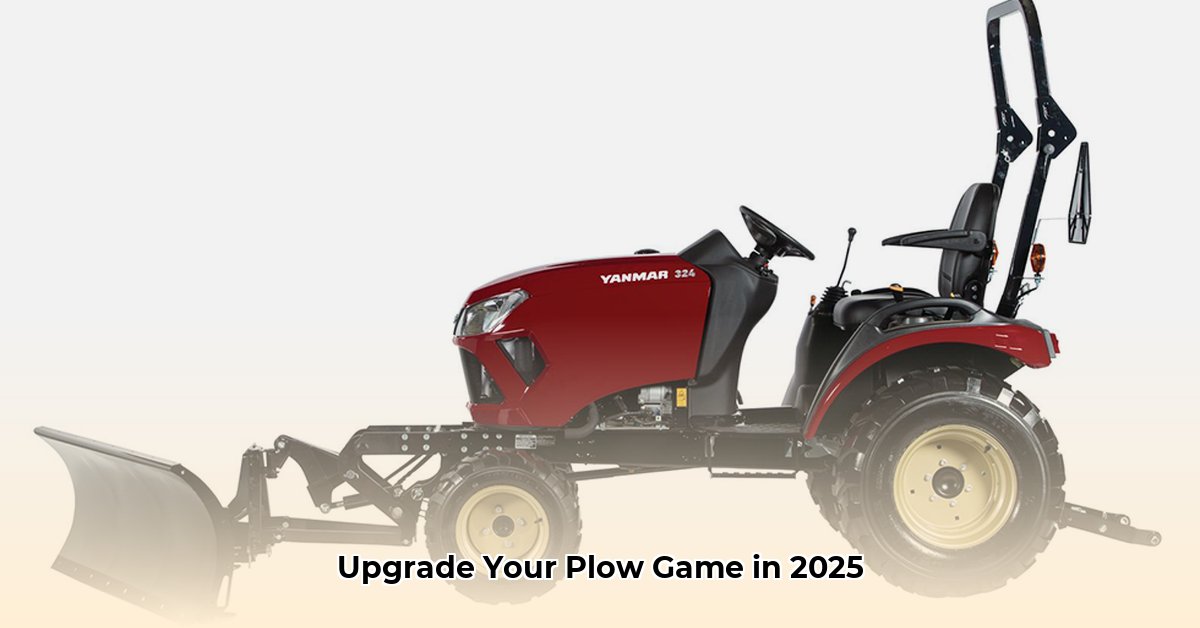
Choosing the Right Plow: A Comprehensive Guide
Picking the right tractor plow attachment can significantly impact your efficiency and the longevity of your equipment. This guide delves into the key factors to consider when selecting a plow, comparing popular attachment types and offering actionable advice for making an informed decision. Whether you're a farmer clearing fields, a landscaper tackling driveways, or a homeowner battling a blizzard, this guide will help you find the perfect plow for your needs and budget. For even more in-depth information, check out this helpful resource.
Hooking It Up: Attachment Methods – Speed vs. Security
The ease of attaching and detaching your plow is a critical factor. Two primary methods exist: quick-attach and integrated systems. Quick-attach systems prioritize speed, ideal for frequent plow changes. Think of them as the "grab-and-go" option for maximum convenience. Integrated systems, such as those offered by Automatixx, are designed for seamless compatibility with specific tractor models, providing a custom fit and often smoother operation. The optimal choice depends on your frequency of attachment changes. Frequent changes favor quick-attach, while consistent use might justify an integrated system.
Blade Angles: Precision for Snow and Soil
The blade angle dramatically affects plowing performance, particularly across varied terrain and materials like snow and soil. A 30-degree angle, common in many models, offers exceptional control, navigating uneven ground and heavy snowdrifts with ease. Adjustable angles further enhance versatility; shallower angles suit lighter tasks, while steeper angles are necessary for deep plowing. Optimizing the blade angle directly translates to improved efficiency and a higher-quality result.
Material Matters: Building a Plow That Lasts
Blade material significantly impacts both performance and longevity. While manufacturers sometimes omit detailed specifications, the steel's hardness and wear resistance are crucial. Thicker blades generally offer superior robustness and withstand heavy-duty use in demanding conditions. Frequent plowing or challenging environments benefit from investing in a thicker, more durable blade, reducing the need for frequent replacements and saving money in the long run. The type of work dictates the ideal material—different materials excel in different challenges.
Sizing Up: Finding the Perfect Fit
Before purchasing, accurately measure your tractor's hitch to ensure compatibility and prevent attachment issues. The plow's width is equally important. An excessively wide plow hinders maneuverability, particularly in confined spaces, while a narrow plow reduces efficiency, requiring more passes to complete the task. The ideal plow size balances maneuverability and effectiveness based on the working area and the amount of ground to be covered.
Installation: A Step-by-Step Guide to Success
Correct plow attachment is paramount for both safety and optimal performance. While the following steps offer a general guideline, always consult your specific equipment's manual for precise instructions.
Step 1: Secure the Tractor: Engage the parking brake and switch off the tractor's engine. Safety is paramount.
Step 2: Precise Alignment: Carefully align the plow's hitch with your tractor's hitch. Precision ensures secure connection.
Step 3: Secure Fastening: Firmly attach the plow using the provided pins or clips. Never force the connection; if it's difficult, re-check the alignment.
Step 4: Stability Check: Gently try to move the plow to verify a solid, wobble-free connection. Any movement indicates a problem that must be resolved before proceeding.
Step 5: Hydraulics Check (If Applicable): If your plow utilizes hydraulics, test its functionality to ensure correct operation.
Plow removal typically involves reversing these steps.
Long-Term Thinking: Value, Warranties, and Leasing
Consider the total cost of ownership. A robust plow requires fewer replacements, saving money over time. A longer warranty reflects greater confidence in the product's durability. Leasing offers a cost-effective option for occasional use, spreading payments over time. Weigh the advantages and disadvantages of buying versus leasing based on your budget and usage frequency.
Comparing Popular Tractor Plow Attachments
This table compares two popular options. Note that specific features vary across models.
| Feature | Earth and Turf Attachments | SnowEx Products |
|---|---|---|
| Attachment System | Quick-Attach | Integrated (Automatixx compatible) |
| Blade Angling | 30° Left & Right | Varies by model |
| Blade Material | Typically high-strength steel | Typically high-strength steel |
| Durability Claims | Bolt-on cutting edges for easy replacement | Often boasts robust construction |
Remember, the best plow depends on your specific needs and tasks. This guide serves as a starting point; further research is recommended before making a final decision. Consider consulting forums and reviews for real-world user experiences.
Understanding Your Needs: Matching Plow to Task
Before selecting a plow, assess your needs realistically. How much snow do you typically receive? What is the size of the area requiring clearing? A small front-mount plow suffices for small driveways, whereas larger wing plows are better suited for extensive properties. Accurately gauging your needs prevents overspending or inefficiency.
Comparing Durability: Beyond Marketing Claims
Evaluating plow durability extends beyond marketing materials. Examine the blade material; heavier gauge steel offers greater resistance to bending and damage. Consider blade thickness—thicker is typically more durable. Inspect the frame's construction; robust welds and sturdy components signify greater durability. Review online user reviews to gain insights into long-term performance.
Measuring Snow Clearing Capacity: Real-World Performance
Snow clearing capacity is impacted by several factors. Plow width is crucial: wider blades cover more ground per pass but demand more power. Match the plow's capacity to your tractor's horsepower; mismatches lead to poor performance or damage. Blade design also matters; some blades are better for fluffy snow, while others excel in heavy, packed snow. Manufacturers often provide estimated clearing capacity, but real-world performance varies according to snow conditions and plowing technique.
Attachment Methods: A Critical Consideration
Tractors and plows utilize various attachment systems. Quick-attach systems prioritize convenience, but require robust construction. Three-point hitch systems, common on agricultural tractors, offer excellent stability but take longer to attach and detach. Always ensure plow-tractor compatibility. Mismatched systems pose safety hazards and accelerate wear. Thoroughly study the manual before operating any equipment.
Step-by-Step: Attaching Your Snow Plow (General Guide)
Secure the Tractor: Engage the parking brake; lower the three-point hitch (if applicable).
Align Plow: Accurately position the plow. This is crucial for correct alignment.
Secure Hitch Pins: Insert and secure hitch pins—double-check!
Hydraulics (if applicable): Raise the plow using the hydraulic system; verify alignment.
Safety Pins: Confirm safety pins are securely fastened.
Test Movement: Slowly raise and lower the plow to check for smooth operation and secure connections.
Choosing Wisely: Prioritizing Long-Term Value
While initial cost matters, long-term value is critical. Higher-quality plows require less repair and last longer. While budget-consciousness is wise, a durable plow saves money and headaches in the long run. Leasing can alleviate the financial burden without sacrificing quality.